Mars Mission

Autonomous humanoid pioneers preparing Mars infrastructure, de-risking every step before astronauts arrive.
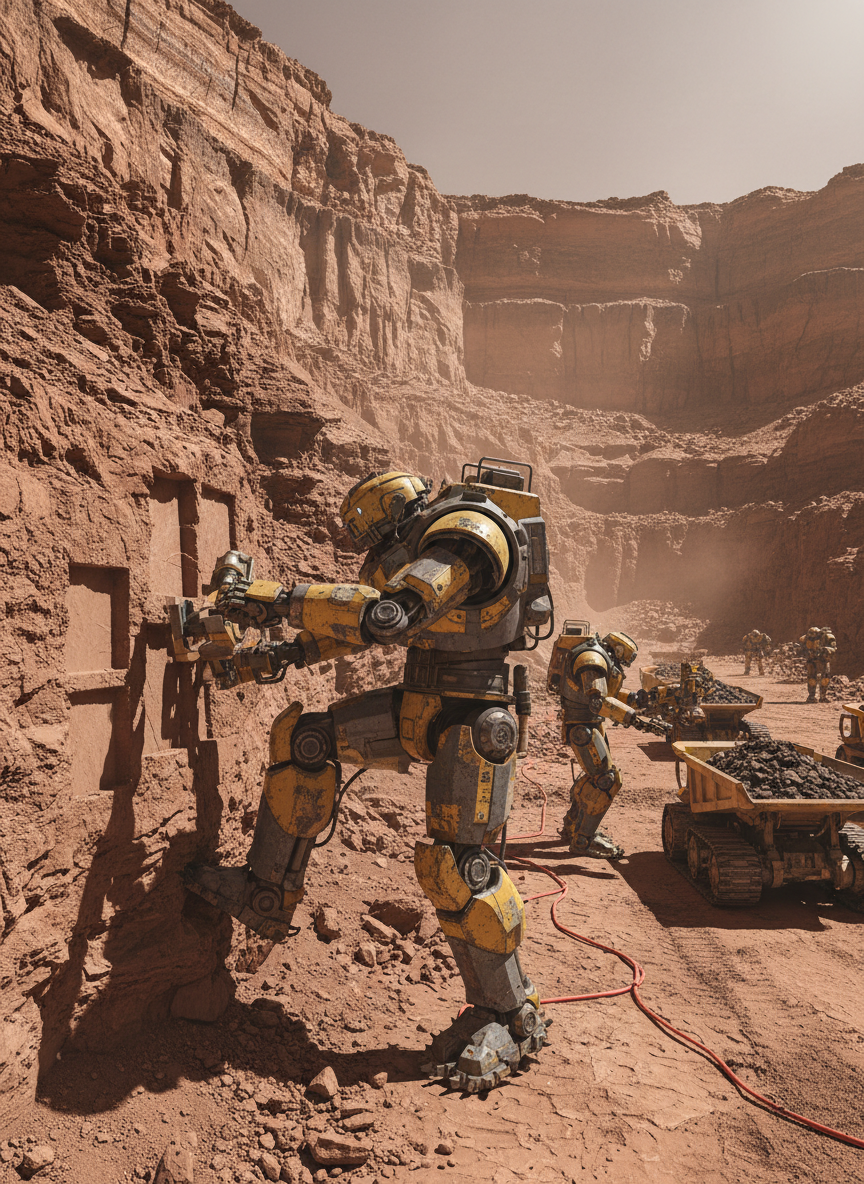
A cluster of robust humanoid mining robots operates at the base of a jagged Martian cliff, their heavy-duty exoskeletons finished in industrial yellow and graphite gray, with visible hydraulic pistons and dust-sealed joints. One robot anchors itself against the rock face with spiked boots while precision cutters carve rectangular cores into the regolith; others load processed ore into low-slung autonomous haulers. Fine particulate dust hangs in the cold air, backlit by harsh midday sunlight that creates sharp, high-contrast shadows against the cliff’s stratified layers. Shot in photographic realism from a slightly low, wide-angle perspective, the composition captures the depth of the quarry and the disciplined layout of equipment. The atmosphere is intense, efficient, and highly technical, emphasizing resource extraction as a foundational step for building secure habitats.

Fieldlogs

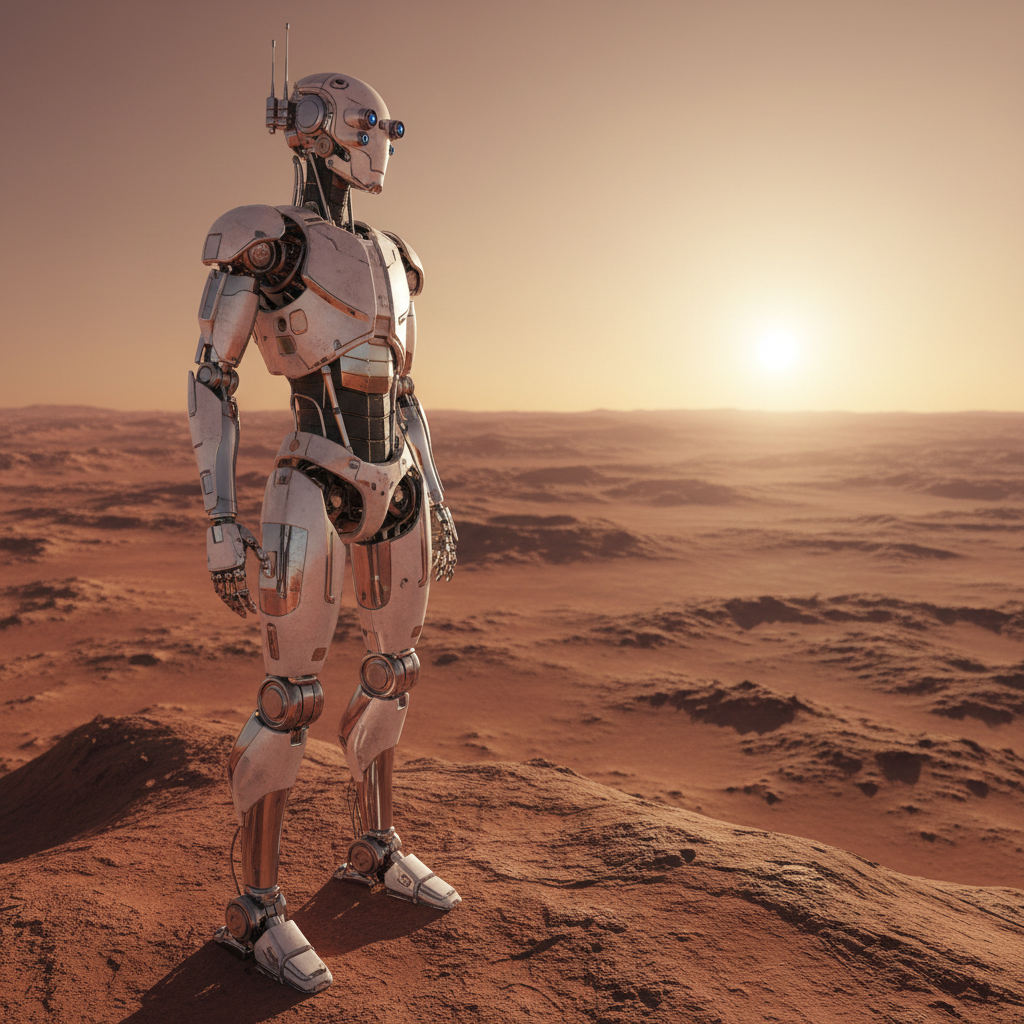
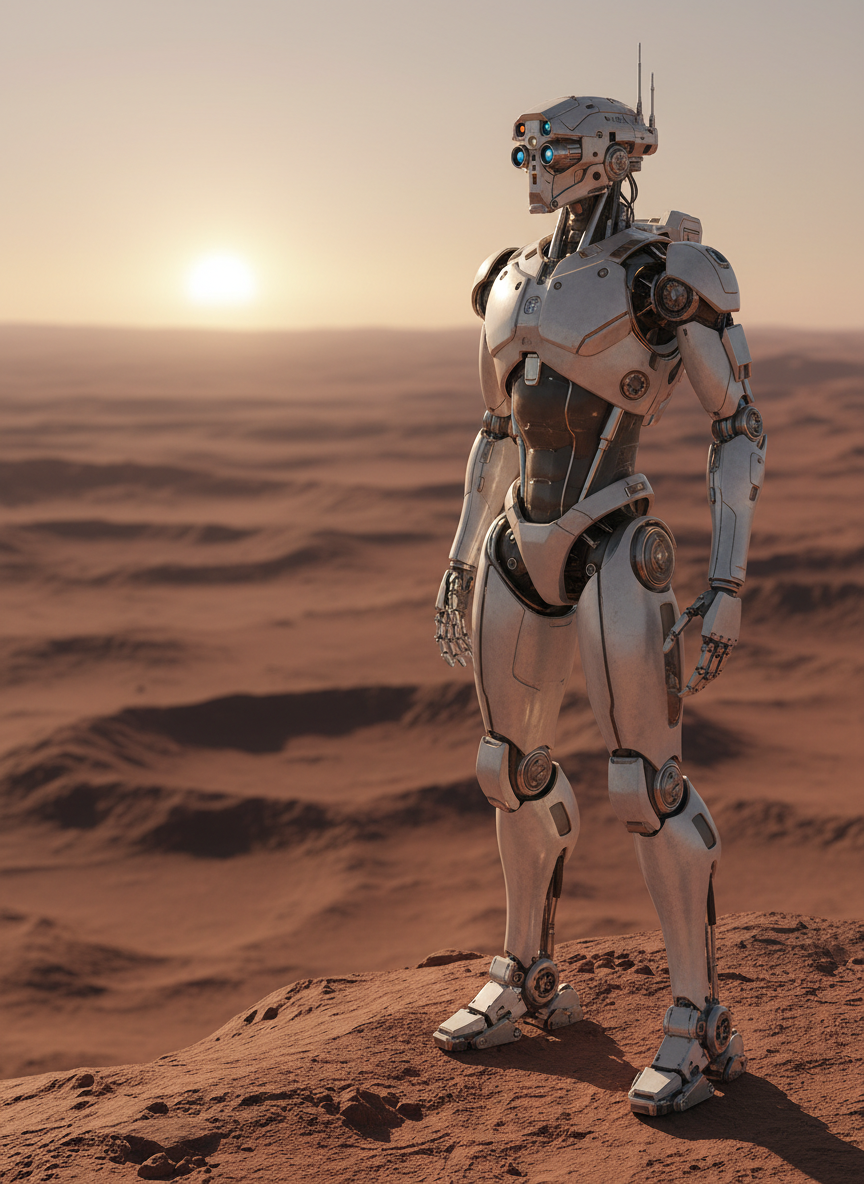
A tall, silver humanoid robot with articulated joints and matte white armor plating stands on the edge of a rust-red Martian plateau, its sensor-filled head turned toward a distant sunrise over cratered horizons. Fine dust clings to its reinforced boots and knee servos, subtly weathering the smooth surfaces. Soft, low-angle morning light casts long, crisp shadows across the rocky terrain, highlighting cables and actuators beneath translucent panels. Captured in photographic realism from a slightly low, three-quarter angle using the rule of thirds, the scene feels aspirational yet technical, with sharp focus on the robot and a gently blurred expanse of Mars behind it, conveying calm determination and professional, mission-focused purpose.
At night on Mars, a lone humanoid security robot with a compact, armored frame patrols the perimeter of a completed habitat cluster, its chest-mounted sensors emitting a soft blue glow that pools on the reddish regolith. The pressurized modules behind it form a ring of illuminated domes and cylinders, their portholes shining warm light into the thin, dusty atmosphere. Overhead, a crisp starfield and the faint disk of distant Earth hang above a silhouette of rocky ridges. Low, directional floodlights around the base cast long, sweeping shadows that dramatize the robot’s precise, deliberate gait. Captured in photographic realism from a low-angle, slightly behind-the-shoulder viewpoint, with controlled depth of field, the image conveys vigilance, security, and the quiet professionalism of autonomous guardians keeping the frontier safe before humans arrive.
A tall, silver humanoid robot with articulated joints and matte white armor plating stands on the edge of a rust-red Martian plateau, its sensor-filled head turned toward a distant sunrise over cratered horizons. Fine dust clings to its reinforced boots and knee servos, subtly weathering the smooth surfaces. Soft, low-angle morning light casts long, crisp shadows across the rocky terrain, highlighting cables and actuators beneath translucent panels. Captured in photographic realism from a slightly low, three-quarter angle using the rule of thirds, the scene feels aspirational yet technical, with sharp focus on the robot and a gently blurred expanse of Mars behind it, conveying calm determination and professional, mission-focused purpose.
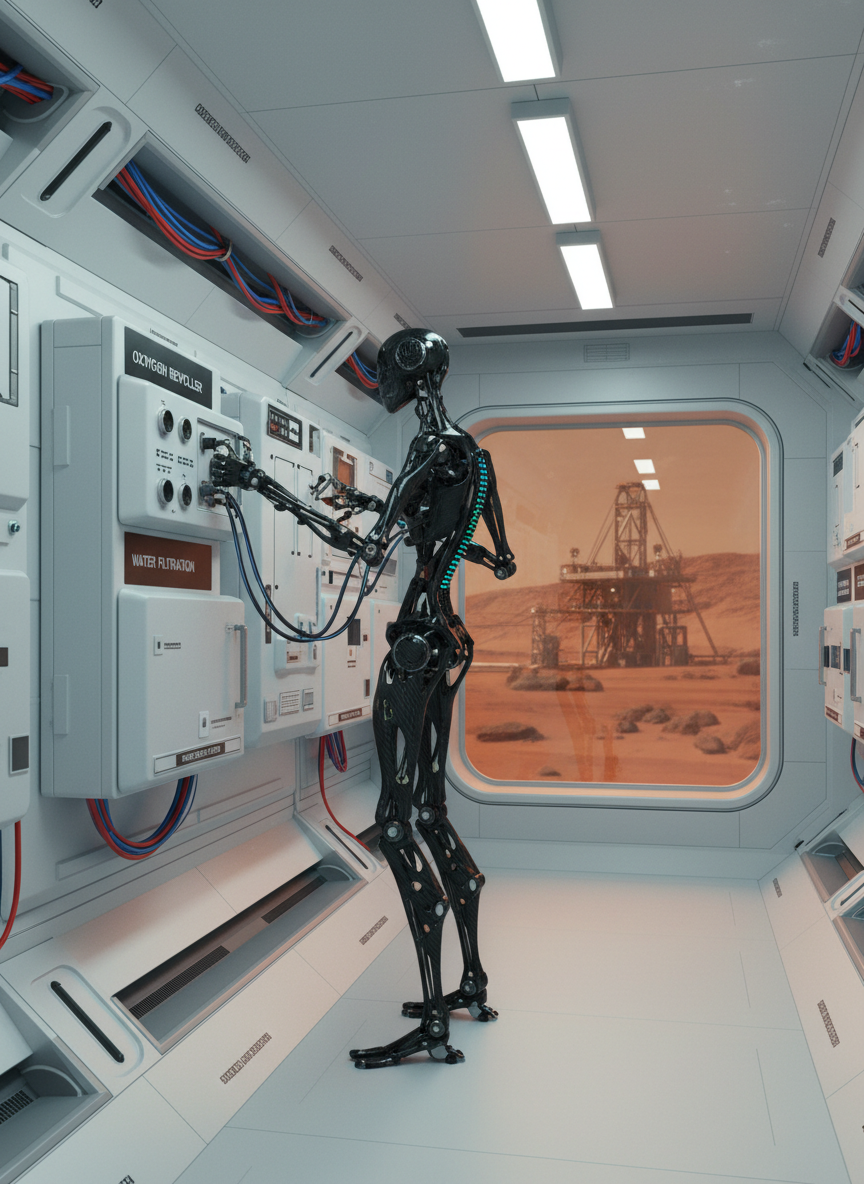
Inside a partially completed Martian habitat module, a slender humanoid maintenance robot with carbon-fiber limbs and illuminated status indicators along its spine calibrates a bank of life-support systems. The interior is clean and modular, with white composite walls, exposed conduit, and neatly labeled panels. Through a thick, curved viewport, the red-orange Martian landscape and a distant mining rig are visible, softly out of focus. Cool, diffuse LED lighting from overhead strips balances with a faint warm glow entering from the viewport, creating subtle reflections on polished metal surfaces. Photographic realism, captured at eye level with a medium-wide lens, frames the robot slightly off-center using the rule of thirds. The mood is controlled and clinical yet hopeful, underscoring the meticulous preparation these autonomous systems perform before humans arrive.

Overview

Our humanoid robots autonomously mine regolith, build habitats, and validate life-support infrastructure, progressing from TRL6 field prototypes to TRL8 mission-ready systems ahead of the 2033 human landing milestones.